
Get the most out of your sales team by empowering them and harnessing their productivity — five practical, proven ways to manage a sales team better, for Indian SMBs in 2026.
The sales team is the front-runner of your business. It's the face of your company to every prospect and existing customer. The sales team takes your product to the market, listens to what customers actually need, proposes the right solution, and drives the conversation forward until a deal is closed and a client is won. In short — the sales team is the most dynamic and the most important part of any business.
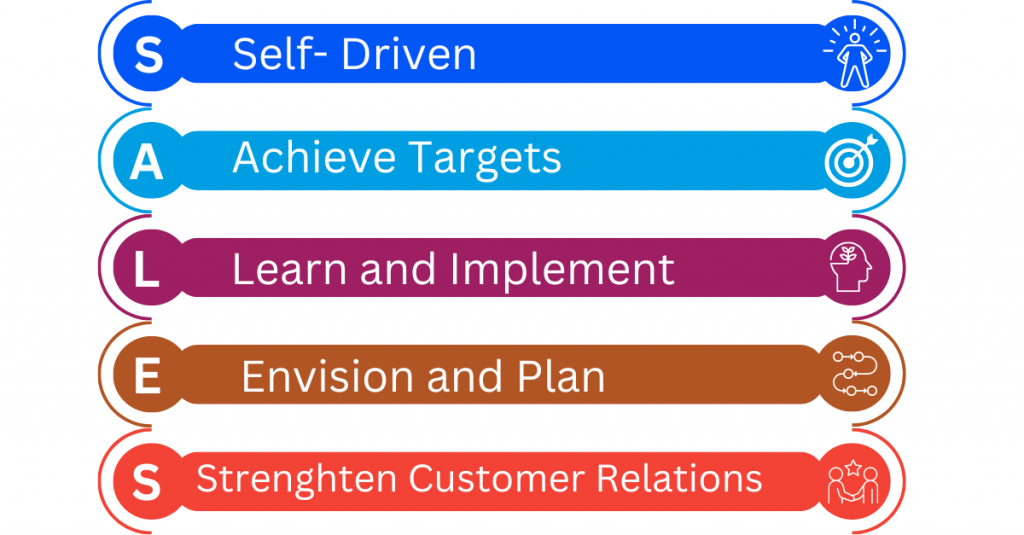
An ideal sales team displays a clear set of qualities — discipline in follow-up, listening over selling, product knowledge, customer empathy, and the resilience to keep going through a long pipeline. The image below captures what those qualities look like in practice:
Good management of every resource and every facet of a business is what separates a thriving company from a struggling one. The sales team — being on the front side of revenue — has to be managed not only to keep a tab on numbers, but also to enhance and empower the team itself.
Done well, sales team management helps individual team members grow, which directly translates into business growth and a steadily expanding customer base. When a team is managed properly, you don't just get more sales this quarter — you build a brand identity, earn customer loyalty, generate repeat orders, and grow a healthy referral pipeline. All of those are signs of a business that's compounding.
Nobody likes micromanagement — other than the managers who do it. 🙂
Every sales person has their own personality, and they channel that personality into how they engage with customers. Don't try to overwrite that unless it's genuinely getting in the way.
Good management is about setting the do's and don'ts — the basic understanding of approach, product fit, and how to position solutions to customers. It is not about handing the team a script and forcing them to read it word for word. That route usually ends in awkward calls and lost deals.
Every customer is different, and so is every salesperson. Managers should assess and sharpen the strengths of each executive and equip them to use those strengths to close more deals.
A systematic approach with defined milestones makes any task better, easier, and more achievable. The same applies to sales. Every business needs a streamlined sales process — from first training of a new executive on what your product or service is, all the way through customer-segment and demography-wise strategies for hitting bigger targets.
Workflow management is the backbone of sales, and the most effective way to manage a workflow is with a good CRM — especially one that can be customised to the way your business actually operates. Every organisation has its own way of selling and its own definition of success. Your CRM should support that, not force you into someone else's mould.
A sales pitch isn't just telling a prospect about your product. It's understanding their problem and showing how your solution addresses it. Every executive should be trained with real-world examples — scenarios where the customer was won over not by what was being sold, but by how clearly the solution mapped to their pain point.
The right pitch depends on a number of factors — the nature of the requirement, the urgency of the purchase, whether it's a new enquiry or a returning customer, the price point, and more. Train your team to think through the three basic W's of every sales conversation:
Customer judgement comes along with this. Train your team to read customer signals — are they price-sensitive or quality-focused? Do they know what they want, or are they looking for guidance? The better your executives read the customer, the more useful they can be — and useful executives close more deals.
Achieving goals matters. So does setting the right goals in the first place. Targets must be set with honest consideration of the product, the customer profile, the market conditions, and current purchase trends.
Your team needs to understand that they're being asked to work smart, not just hard — and that the targets are 100% achievable if the effort and execution come together. That belief alone changes what a salesperson is willing to do.
Managers, in turn, need a deep understanding of how sales actually works in the business and what each individual on the team is capable of. Whether it's a personal target or a team target, it should reflect the size of the team, their capacity, and a fair expectation of output. Stretch goals are good. Impossible ones quietly demoralise the floor.
A single word of praise goes a long way.
Sales executives put in real effort, sincere intent, and push themselves toward their maximum productivity to bring revenue into your business. That deserves a pat on the back, a public mention, and genuine appreciation. Celebrate the milestones — not just the quarterly wins, but the small ones too: the lead reactivated after months, the difficult customer finally closed, the first big quote that turned into an order.
"Appreciation can make a day. Can even change a life. It matters." — Margaret Cousins
If your sales team doesn't feel appreciated, their enthusiasm fades. And if the front-runner of your business is running on empty, the numbers will follow soon enough. The simplest, cheapest, most effective tool a manager has is recognition — used well, it pays back in performance.
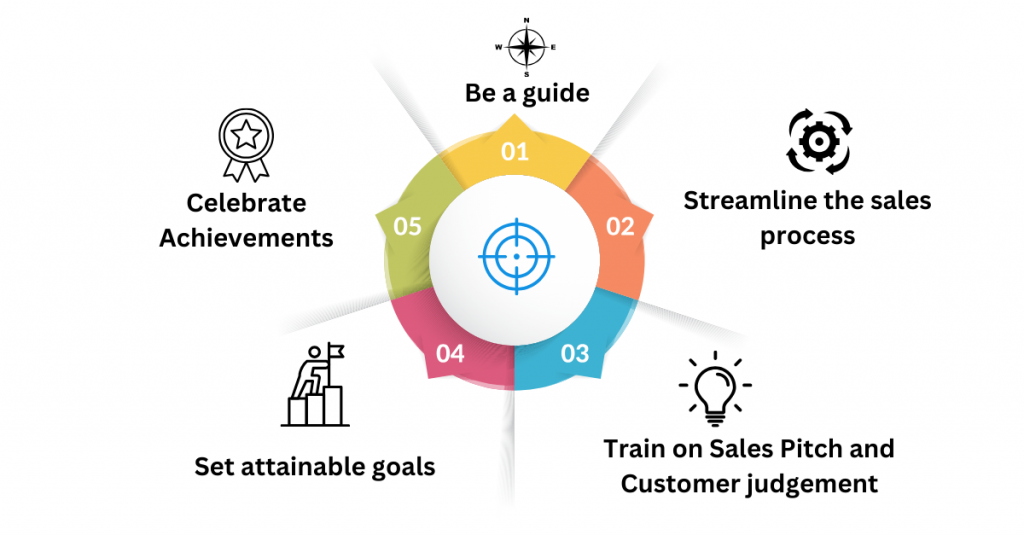
📌 Bringing it together: The five practices above are not in conflict with each other — they reinforce each other. Independent teams (Practice 1) thrive on streamlined processes (Practice 2), strong training (Practice 3), realistic goals (Practice 4), and timely recognition (Practice 5). Skip any one and the others lose their edge.
Clientfisher is built specifically for Indian SMBs — single-page lead workflow, JustDial & IndiaMart integration, instant quotes, automated reports, and a mobile app your team will actually use. Book a free demo with your real lead sources and see it live.
Schedule Free Demo →Managing a sales team well isn't about controlling every move — it's about creating the conditions where good salespeople can do their best work. Guide them, give them a system, train them, set targets they can believe in, and recognise their wins out loud. The teams that win consistently are not the most micromanaged ones. They're the ones that feel trusted, equipped, and seen.
If you're an Indian SMB looking to make any of these five practices easier to execute — particularly the workflow and reporting side — that's exactly the problem Clientfisher was built to solve.
Book a free, no-obligation demo with our team. We'll show you how Clientfisher's CRM, mobile app, and automated reports can support the way you manage your sales team — with your actual lead sources and product catalogue.